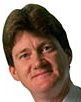
White House budget director Peter Orszag has his hands full these days trying to wrangle down a deficit that has ballooned to an estimated $1.4 trillion. Part of that borrowing was necessitated by the recession, while part of it was designed to shorten the economic crisis.
Orszag says the federal deficit needs to be cut to about 3 percent of economic growth in the coming years to reduce the sea of debt. At the same time, the U.S. has to guard against sending the economy into a tailspin by pulling back too soon on stimulus programs.
Striking a balance is "extraordinarily challenging," Orszag tells NPR's Steve Inskeep.
But he says it's important to note that the economy has made significant progress in the past year.
"On the one hand, [you have] the GDP gap, the gap between how much the economy is producing and how much it could produce, and, on the other hand, these deficits," he says.
"If we only faced one or the other, the way forward would be clearer. But balancing between the two keeps me up at night."
Sometime around 2011 to 2013, "that's where we're going to start to need some transition from the extraordinary assistance that the federal government has been providing to try to jump-start the economy," he says. "We're working through [this], and we haven't made final decisions on the best path to walk down from where we are now to where we need to get."
He says the deficits needed to be wound down from their current 10 percent of the economy to "something around 3 percent" but that it should be "done in a way that avoids the risks of 1937 — where you pulled fiscal support away from the economy too quickly and threw the economy back into a recession."
The current era of high deficits is "exceptional times," notes Orszag, an economist who led the Congressional Budget Office before being tapped to head the Office of Management and Budget. In fact, he says, the national economic situation is more precarious than at any time in the past 50 years.
Orszag makes no apologies for not projecting a balanced budget anytime in the near-term: "You have to remember the situation that we inherited."
The Medicare Prescription Drug Benefit and the 2001 and 2003 tax cuts weren't paid for, he points out. That was compounded by the reduction in tax revenue from the economic downturn, the cost of the economic stimulus and the need for increased spending on unemployment benefits and food stamps.
"So, the point being, we inherited a big hole," Orszag says.
But he says the economy has been pulled back from the brink, and the past year has seen an amazing turnaround.
"I do think it's important to step back," he says. "If in November 2008, someone told you that credit spreads would be back to normal levels and the economy would be growing by 3.5 percent, you probably would have looked at them like they were a little bit crazy."
Orszag, who studied health care policy at the Washington-based Brookings Institution, says he thought the House and Senate health care legislation had "captured important opportunities."
"Given the need to actually enact legislation, we are doing about as much as could be done," he says.
But the budget chief is circumspect about the difficulty of getting budget priorities through Congress.
"The thing about the politics of the deficit is that the deficit is unpopular, but so are many specific steps to reduce it," Orszag says. "There are some that will decry the deficit but are unwilling to embrace anything that will actually bring it down."
Showing posts with label Peter Orszag. Show all posts
Wednesday, November 11, 2009
The Difficulty Balance Between the Short-Term Need to Stimulate the Economy and the Long-Term Need to Reduce Deficits & Debt
In the November 11, 2009 National Public Radio (NPR) article "Orszag: Deficit Can Help But Slows Recovery," Peter Orszag, the Director of the Office of Management and Budget, explains that budget deficits are appropriate fiscal policy for fighting recessions, but in the long run there is a need to reduce deficits and the public debt to avoid its burdensome impact on future economic growth.
Wednesday, August 26, 2009
Most red ink ever: $9 trillion over next decade
In the August 26, 2009 article "Most red ink ever: $9 trillion over next decade," Associated Press writer Jim Kuhnhenn reports the new forecasts of upcoming U.S. federal budgets project larger deficits than previously expected:WASHINGTON – In a chilling forecast, the White House is predicting a 10-year federal deficit of $9 trillion — more than the sum of all previous deficits since America's founding. And it says by the next decade's end the national debt will equal three-quarters of the entire U.S. economy.
But before President Barack Obama can do much about it, he'll have to weather recession aftershocks including unemployment that his advisers said Tuesday is still heading for 10 percent.
Overall, White House and congressional budget analysts said in a brace of new estimates that the economy will shrink by 2.5 to 2.8 percent this year even as it begins to climb out of the recession. Those estimates reflect this year's deeper-than-expected economic plunge.
The grim deficit news presents Obama with both immediate and longer-term challenges. The still fragile economy cannot afford deficit-fighting cures such as spending cuts or tax increases. But nervous holders of U.S. debt, particularly foreign bondholders, could demand interest rate increases that would quickly be felt in the pocketbooks of American consumers.
Amid the gloomy numbers on Tuesday, Obama signaled his satisfaction with improvements in the economy by announcing he would nominate Republican Ben Bernanke to a second term as chairman of the Federal Reserve. The announcement, welcomed on Wall Street, diverted attention from the budget news and helped neutralize any disturbance in the financial markets from the high deficit projections.
The White House Office of Management and Budget indicated that the president will have to struggle to meet his vow of cutting the deficit in half in 2013 — a promise that earlier budget projections suggested he could accomplish with ease.
"This recession was simply worse than the information that we and other forecasters had back in last fall and early this winter," said Obama economic adviser Christina Romer.
The deficit numbers also could complicate Obama's drive to persuade Congress to enact a major overhaul of the health care system — one that could cost $1 trillion or more over 10 years. Obama has said he doesn't want the measure to add to the deficit, but lawmakers have been unable to agree on revenues that would cover the cost.
What's more, the high unemployment is expected to last well into the congressional election campaign next year, turning the contests into a referendum on Obama's economic policies.
Republicans were ready to pounce.
"The alarm bells on our nation's fiscal condition have now become a siren," said Senate Minority Leader Mitch McConnell of Kentucky. "If anyone had any doubts that this burden on future generations is unsustainable, they're gone — spending, borrowing and debt are out of control."
Even supporters of Obama's economic policies said the long-term outlook places the federal government on an unsustainable path that will force the president and Congress to consider politically unpopular measures, including tax increases and cuts in government programs.
"The numbers today portend the biggest budget fight we've probably had in decades in the United States," said Stan Collender, a former congressional budget official.
The summer analyses by the White House budget office and by the Congressional Budget Office reached similarly bleak conclusions. The CBO's 10-year deficit figure was smaller — $7 trillion — but that is because it assumes that all tax cuts put into place in the administration of former President George W. Bush will expire on schedule by 2011. Obama's budget baseline, however, hews to his proposal to keep the tax cuts in place for families earning less than $250,000 a year.
Both budget offices see the national debt — the accumulation of annual budget deficits — as more than doubling over the next decade. The public national debt, made up of amounts the government owes to the public, including foreign governments, stood Tuesday at a staggering $7.4 trillion. White House budget officials predicted it would reach $17.5 trillion in 2019, or 76.5 percent of the gross domestic product. That would be the highest proportion in six decades.
Congressional Budget Office director Douglas Elmendorf said if Congress doesn't reduce deficits, interest rates are likely to rise, hurting the economy. But if Congress acts too soon, the economic recovery — once it arrives — could be thwarted.
"We face perils in acting and perils in not acting," Elmendorf told reporters.
David Walker, former head of the Government Accountability Office, said the numbers illustrated the need for a national commission that would review spending and taxing options and present lawmakers with a deficit reduction plan that Congress could approve or reject.
"We're going to have to do a hard course correction once we turn the corner on the economy," Walker, now president and CEO of the Peter G. Peterson Foundation, said.
Both Romer and Obama budget director Peter Orszag said this year's contraction would have been far worse without money from the $787 billion economic stimulus package that the president pushed through Congress as one of his first major acts.
At the same time, the continuing stresses on the economy have, in effect, increased the size of the stimulus package because the government will have to spend more in unemployment insurance and food stamps, Orszag said. He said the cost of the stimulus package — which spends most of its money in fiscal year 2010 — will grow by tens of billions of dollars above the original $787 billion.
The White House also credited the $3 billion cash-for-clunkers auto program for contributing to recent economic growth.
Orszag, anticipating backlash over the deficit numbers, conceded that the long-term deficits are "higher than desirable." The annual negative balances amount to about 4 percent of the gross domestic product, a number that many economists say is unsustainable.
But Orszag also argued that overhauling the health system would reduce health care costs and address the biggest contributor to higher deficits.
"I know there are going to be some who say that this report proves that we can't afford health reform," he said. "I think that has it backward."
At the same time, 10-year budget projections can be "wildly inaccurate," said Collender, now a partner at Qorvis Communications. Collender noted that there will be five congressional elections over the next 10 years and any number of foreign and domestic challenges that will make actual deficit figures very different from the estimates.

David M. Walker, the former Comptroller General of the United States, holds a B.S. degree in accounting from Jacksonville University.
Saturday, June 13, 2009
Obama Plan to Pay for Health Care Reform

According to a June 13, 2009 article by Josh Gerstein in Politico:
President Barack Obama says he's now found savings that will pay almost all the costs of a massive overhaul of America's health care system.
Obama on Saturday is announcing an additional $313 billion in new proposed savings that he says would bring the total funding available for his top-priority health insurance reform to nearly $950 billion over 10 years.
White House officials insisted the new savings were rock-solid, but also acknowledged they had yet to settle on a specific mechanism to achieve lower prescription drug costs that make up nearly one-quarter of the new savings.
“Any honest accounting must prepare for the fact that health care reform will require additional costs in the short term in order to reduce spending in the long term,” Obama says in his weekly radio and Internet address. “Today, I am announcing an additional $313 billion in savings that will rein in unnecessary spending, and increase efficiency and the quality of care.”
The new proposals from Obama came as the drive for health care reform reaches a pivotal juncture in Congress. On Monday, the Senate Finance Committee is scheduled to receive Congressional Budget Office estimates on a slew of health-care options. On Wednesday, the committee is expected to unveil proposed legislation.
In advance of those milestones, the White House was moving aggressively to counter public criticism that funding plans for the health reform effort are unrealistic, particularly in the face of an expected 10-year pricetag of $1 trillion or more. Some analysts have faulted the White House for being overly optimistic about savings and tone-deaf to which tax-raising proposals are likely to fly in Congress.
In his address Saturday, Obama refers to a 10-year total of more than $600 billion in “savings” for health care. However, he does not explain in his latest comments that, under his revised budget released last month, $326 billion of that amount would come from tax hikes on Americans making over $250,000 a year, “loophole closers,” and higher fees for some government services.
In a conference call with reporters Friday, Office of Management and Budget Director Peter Orszag said the latest announcement signaled that the White House had met its obligation to identify funding sources for a broad-based effort to make health insurance more affordable and more widely available.
“We are making good on this promise to fully finance health care reform over the next decade,” Orszag declared.
//
The bulk of the new $313 billion in savings would come from cutting or reducing the growth of payments to hospitals, medical equipment manufacturers and laboratories — though the major cuts don't target doctors, Orszag said.
Over the next decade, $110 billion is slated to come from reducing reimbursements to take account of what Orszag described as the ability of providers to improve their efficiency. “Health care services should be able to achieve and do achieve productivity improvements over time,” he said. According to a fact sheet released by the White House, future increases in such Medicare payments would be reduced based on an assumption that health care providers achieve half the productivity increases seen elsewhere in the economy. The budget official said the reductions would take place even if providers failed to garner the projected efficiencies.
Another $106 billion would come from cuts in so-called disproportionate share payments the federal government makes to hospitals with large numbers of uninsured patients. “As the ranks of uninsured decline under health reform, those payments become less necessary,” Orszag said.
About $75 billion is slated to come from lower payments for prescription drugs. However, Orszag said the White House was “in
discussions with stakeholders over the best way of achieving that $75 billion.”
Notwithstanding that ambiguity, Orszag asserted that the White House had put forward $950 billion in budgetary offsets that could be use to fund health reform. He called the proposals "hard" and "scoreable," meaning that they were sufficiently certain and specific to pass muster with CBO officials who formally tally the cost of budget items.
Asked about the discrepancy, Orszag said, “There’s been continuous skepticism that we will come forward with detail….The detail on the $75 billion for prescription drugs will be forthcoming in the very near future and I will rest my reputation as a former CBO director on the fact that there are multiple ways in which those savings can be achieved and we are committed to achieving that level of savings in this package.”
There were signs that the announcement of the additional $313 billion of savings may have been rushed. In addition to the vagueness about the $75 billion in lower drug costs, the White House’s health care reform coordinator, Nancy-Ann DeParle, did not join a conference call with reporters to announce the new proposals. Her presence had been advertised in advance, but a spokesman said she was in another meeting and could not participate.
The cuts and savings are likely to engender warnings from providers that de-facto rationing will occur as patients in some areas find themselves unable to find providers willing to perform lab tests, X-rays and the like, due to the lower reimbursement rates.
Hospitals are also likely to protest that the disproportionate share payments, which are targeted for cuts of 75 percent, are vital to maintaining hospitals in costly urban centers, and to keeping teaching hospitals viable.
“It is unlikely to be an exact match on a hospital-by-hospital basis but what we believe will occur is that the remaining DSH payments that will still exist can be better targeted to the hospitals most in need,” Orszag said.
Subscribe to:
Comments (Atom)